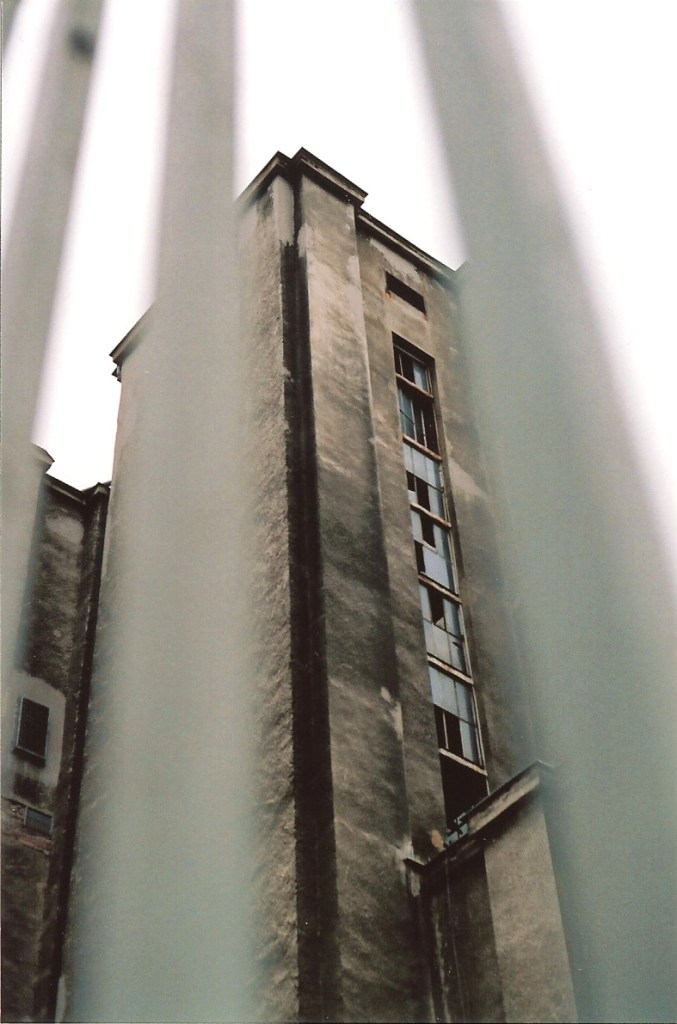
Somebody must have made a false accusation against Joseph K., for he was arrested one morning without having done anything wrong. This is the opening sentence of Franz Kafka’s The Trial, about a man arrested and made to stand trial for a crime that is never divulged to him. I used this as a starting point for a new story.
It was early. Even for Joseph, who was an early riser. Every day was a work day and he had been expecting to get in his van and drive. That was what he did, every day. But this morning, he was still in bed when he was woken by a knock on the door. He couldn’t think who it would be. Sometimes Mr Moore next door would complain about something, but Joseph had been really careful to park his van neatly in the correct parking spot, and did more than his fair share when it came to putting the bins out on a Friday morning. Surely it couldn’t be him. But nobody else ever came to Joseph’s door.
The knock came again, and the doorbell rang too, loud and urgent. Joseph jumped out of bed and hurriedly put on his clothes from yesterday, although, in his panic, he couldn’t find his socks or shoes. More important to get to the door. There must be some emergency, he thought. He could find his socks and shoes later.
At the door stood two men dressed in grey overcoats, almost exactly matched in their height and girth so they blocked out the light as effectively as the door had done. Even their faces looked the same. Joseph knew enough to recognise who these men were. His heart sank.
“Mr Joseph K?”, asked the man on the left.
But he didn’t wait for an answer, launching into a long speech dense with double and triple negatives, wheretofors and foreign phrases, all delivered with the speed and efficiency of a machine gun. It went on for several minutes and Joseph’s attention wavered. He noticed that one of the men had a spot of pale mud on his left shoe. And that brought his attention to his own unshod feet. They were getting cold. He wondered if he could just walk back into the house, quietly shutting the door on these strange men, put on his socks and shoes and continue his day. He thought about his van and felt a pang of love for its messy passenger seat, smothered in maps and papers. His van was probably his best friend, and Joseph even started to wonder whether it might rescue him from his predicament.
Then the talking stopped and the second man said. “You have signed the papers already confessing to the crimes aforementioned. There is no need for any further comment. Where do you live?”
Underneath Joseph’s cold feet, the world seemed to spin. When and how could he have signed the papers as they had said? And then the question about where he lived. Wasn’t this where they were now?
“Here. This is where I live”.
The men took out tablets from their pockets and both started tapping. “No. That is not what the records show. Where do you live?”
“I’m sorry. I have no other address.”
“But you live next door to this man?”. They shuffled to one side to reveal Mr Moore, peering at Joseph more unpleasantly than ever. Despite the poison in his neighbour’s face, he was relieved.
“Why yes. That’s right. This is Mr Moore. My neighbour”.
“Then you cannot live here. This gentleman lives at Leaders’ Park. And we know you don’ t live there. We have reason to believe you are lying.”
“I don’t understand. I have always lived here, since it was allocated to me. Mr Moore, surely you know this. You have been next door for a long time, Your records must show that. I can find you the papers. Show you proof.”
But the men were not willing to argue any further. “This will be added to the list of crimes you have admitted to. We do not need any further proof. Now, you must return home so we can arrest you.”
“But where? Where do you think I should be?”
“At your home, of course. We will follow you.”
Joseph was beyond tired now. His feet were aching and he felt like crying. He started retreating back into his home.
“No!” shouted the men, “Not in there. You must leave so we can follow you.”
One of them stepped forward, turning remarkably neatly inside the hallway and shoving Joseph out of the front door.
He begged to be allowed to find his shoes and this was added as a further crime on the list being held against him. He asked where he should go and this, too, added to a growing list of offences.
And so he started to walk, gingerly, feeling the rough pavement beneath his sensitive feet. And three metres behind, he was trailed by the two men, with Mr Moore following curiously at the back. It was a fresh, dry morning, although rain had fallen in the night. Puddles soon became a relief for Joseph’s sore feet. The procession continued, passing the boarded up charity shops on the high street and a roost of staring paper boys loitering outside the newsagents. Joseph noticed the birds singing. He supposed they must do that all the time, although, from his beautiful van he had never heard them before. From behind a window, he saw a dog growling at him and wondered if it got face ache, gurning and grimacing all day.
Outside the State Church, he turned right. He regretted it slightly, because the road went uphill and he felt the pressure more keenly on his feet. But he slowed slightly, and the men behind slowed and so did Mr Moore. And they continued past the chauffeurs lined up to take the Governors to their offices, past the censors’ offices and the old theatre which now doubled as a meeting place for important announcements.
And then they reached the town’s green belt, with its carefully manicured gardens, zoned to avoid anybody meeting the wrong kind of person. He needed to rest now. The shock of all that had happened was abating and now he felt only exhaustion. He sat down, knowing that a timer would monitor how long he stayed there, that he would be moved on by an Attendant if he outstayed his allocation. The men and Mr Moore loitered.
This strange, lonely, walk continued. All day, all night, and on into countless days, months and years. Joseph is elderly now, but he is strong. He has learnt to appreciate the details around him. He notices how plants grow from walls where the houses have been left empty, watches the trees give up their leaves to create a soft, sweet humus around their bases, knows the birds that come and go through the year. He observes the clouds and knows what the weather will be long before the professionals have made their forecasts. Joseph and his followers fell into a routine, but now only one man remains, a constant, silent shadow. The other man in grey succumbed to bunions and was transferred from the pursuit. Mr Moore was run over, waiting in the middle of the road while Joseph rested at a bus stop. He was not missed.
Neither man talks. Neither pays attention to the other. And so they walk, day after day, Joseph still ignorant of the crimes he was supposed to have committed, ignorant of the place he is supposed to live.
Follow me on Instagram
Copyright © 2026 Caroline Coleman | All rights reserved
 Mudwriter