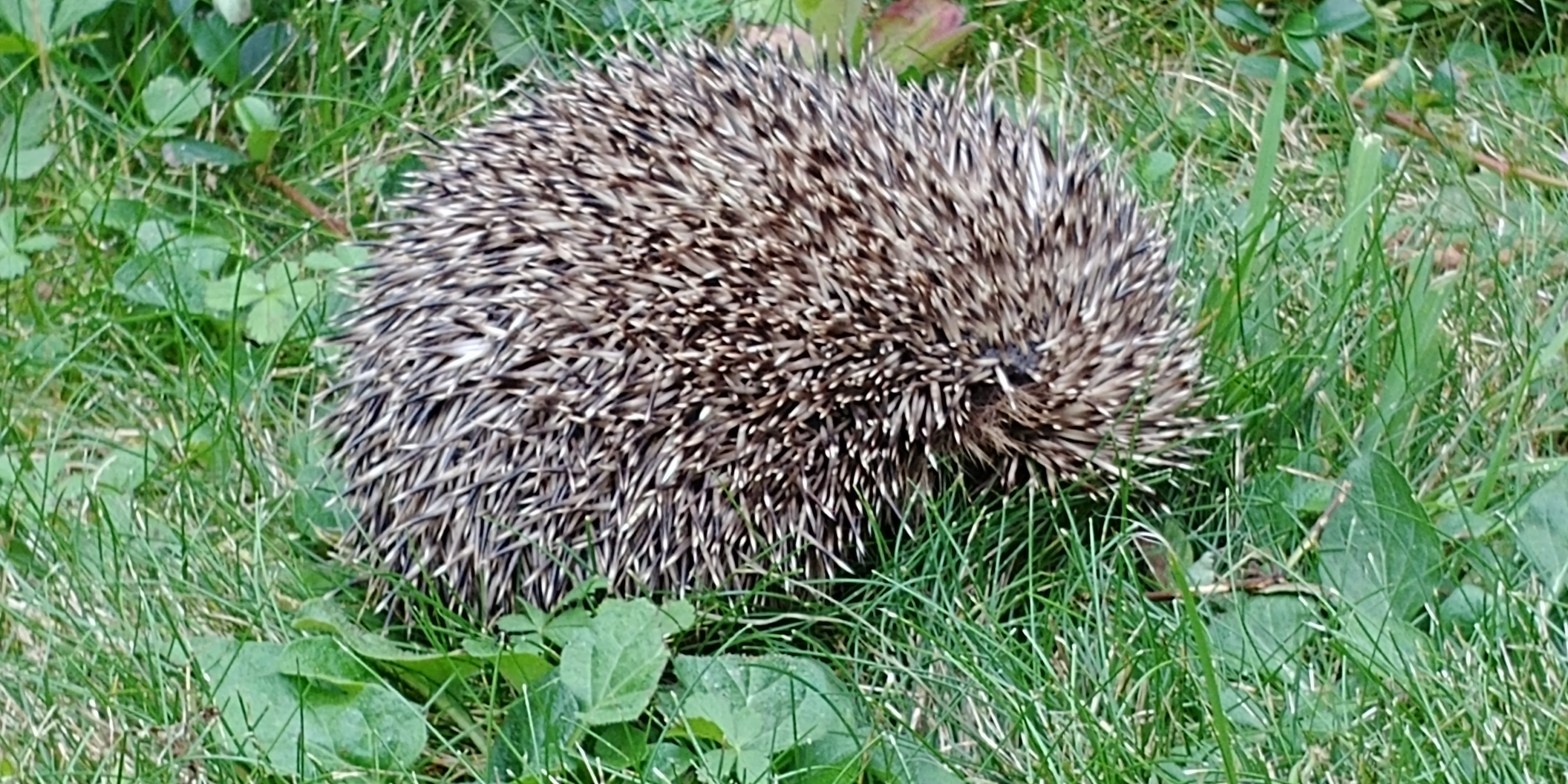
The weather has turned colder, bringing a lull in the rain-sodden autumn. The horizons of our days are pulling together. It’s a time of change, when the last shining berries are snapped up by hungry birds and the trees expose their skeletons.
I’ve gone outside in the dark evening to scatter some food for the hedgehog that frequently snuffles and crunches around here. But we have been away, and I haven’t seen it for a while. I’ve noticed dried, fallen cherry leaves have disappeared from the lawn, so maybe it has already settled down for the winter. I’m setting up out a trail camera to see if I can find out.
I wonder whether hedgehogs really hibernate, or do they just become more inactive during winter? I know that some mammals, like grey squirrels, sleep more in winter but it is not described as true hibernation. So what is the difference?
I start reading around and find out that hedgehogs do really hibernate. Their curled-up, leaf-encrusted state is one of torpor. Their entire metabolism slows during this time: the heart rate dropping from 190 to a sluggish 20 beats per minute; their breathing too. During this time, they will live off the fat they have built up although they might emerge from time to time to deposit shiny black faeces and to grab a snack before returning to their natural coma.
My camera gives me the result I hoped for. Nose down, a podgy-looking ball of spines on clockwork legs zigzags as it seeks out every last one of the meaty biscuits. It scrunches each one with its mouth half open. I don’t know if this is one of the two toddlers I watched snuggling together on the garden path one warm summer evening, but I hope it is. I know now that I need to keep on putting food out, helping this now endangered creature to put on as much weight as possible before it settles down for the winter. After that, I will wait and hope that we see it again as the days lengthen next spring.
 Mudwriter